
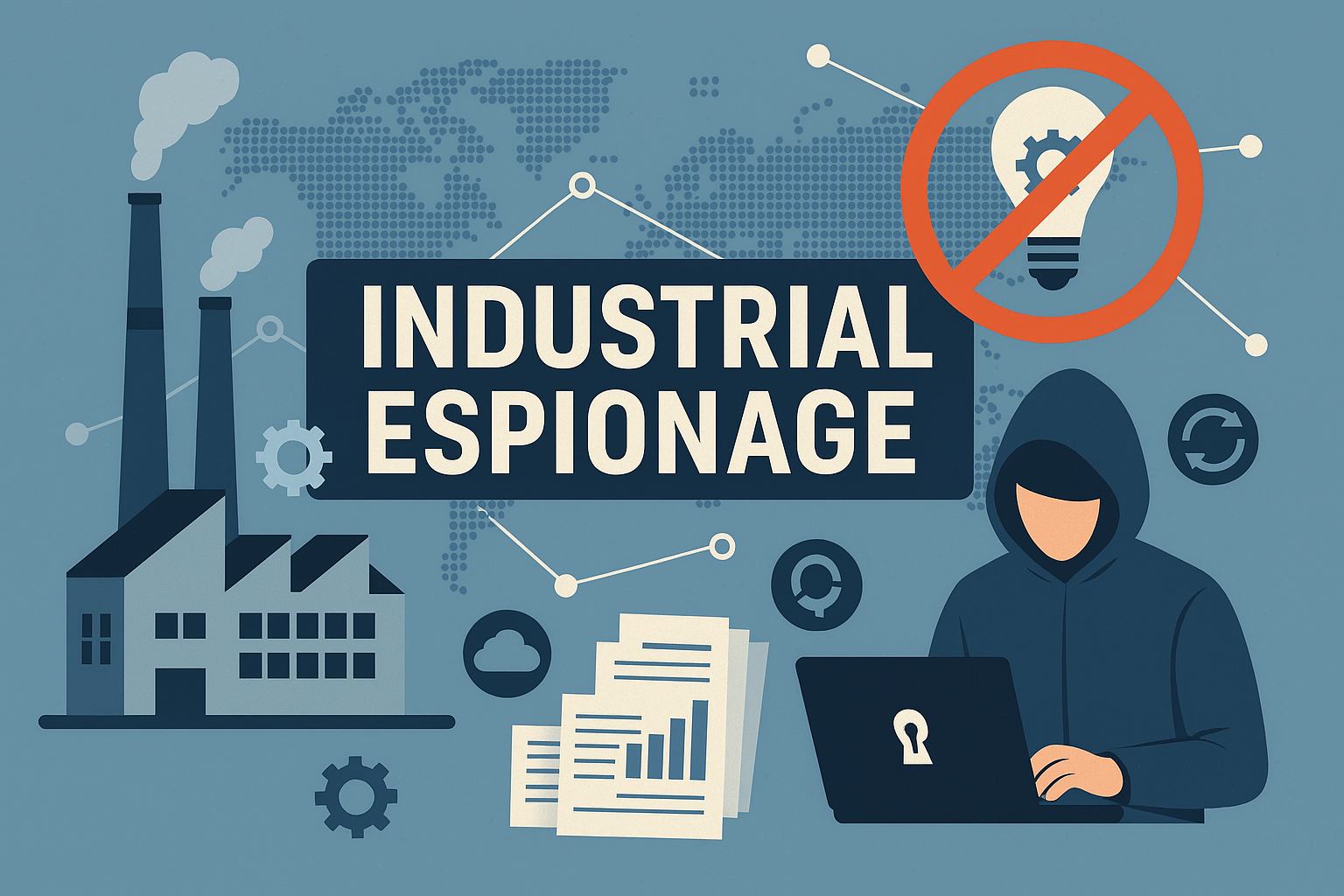

In a world increasingly driven by technology, data, and global interconnectivity, industrial espionage has emerged as a pressing concern for nations and corporations alike. I tried to highlight, the intertwining of global trade, technological innovation, and geopolitical rivalries has transformed the theft of industrial secrets into a strategic threat that goes far beyond the boardroom. This article does not merely point to the dangers but systematically outlines the foundations, implications, and future directions of this phenomenon.
The Globalization of Capital and the Rise of Multinationals
One of the main catalysts of the current industrial espionage crisis is the rapid evolution of global communication and the digitization of information. Since the late 20th century, advances in communication technologies have fueled globalization, enabling capital, labor, and data to move seamlessly across borders. Multinational corporations (MNCs), especially those rooted in developed economies, have played a crucial role in this transformation. By investing in foreign markets and operating complex international supply chains, MNCs have not only spread innovation globally but have also become lucrative targets for espionage.
The emergence of digital capitalism brought about a new era of economic dynamics. In this environment, multinational enterprises (MNEs) represent not only engines of economic expansion but also repositories of critical knowledge. From proprietary software algorithms to biotechnology, these entities guard secrets that define their competitive advantage. Unfortunately, this makes them prime targets for industrial espionage. Furthermore, the increasing convergence of digital and physical assets has made it easier for malicious actors to infiltrate organizational systems without stepping foot inside physical premises.
Interestingly, while foreign direct investment (FDI) has often been portrayed as a vehicle for development in emerging markets, it also introduces vulnerabilities. The presence of MNCs in regions with weak legal infrastructures can expose proprietary technologies to theft, especially when espionage is state-backed or overlooked. Countries that rely heavily on FDI for growth must therefore strike a delicate balance between openness and strategic protection.
Economic Intelligence and the Modern Espionage Framework
Espionage today is no longer confined to traditional military operations. Economic and industrial espionage now represent vital aspects of a country’s strategic capabilities. The intelligence cycle—which involves identifying information needs, gathering data, analyzing findings, and distributing insights—is applied not only to military matters but also to economic domains. The protection of business secrets, intellectual property, and high-value data is thus directly tied to national security.
At the heart of this shift lies the concept of economic intelligence. Governments, particularly in authoritarian states or those with hybrid systems, increasingly view espionage as a tool to promote economic growth. State actors and private entities cooperate to collect, analyze, and exploit business-related intelligence to outcompete rivals. In recent years, Chinese state-affiliated organizations, for example, have faced accusations of systematically stealing technologies in fields like automotive, aerospace, and pharmaceuticals.
Intelligence operations now encompass a broad range of domains: political, military, technological, and economic. The pursuit of economic intelligence, in particular, involves collecting data on emerging technologies, market behaviors, business strategies, and supply chains. In some cases, this data is obtained through open-source methods (OSINT), but increasingly, illegal tactics such as cyberattacks, insider recruitment, or corporate sabotage are being used.
Economic security today has become one of the main pillars of national security. As the book rightly points out, the link between national prosperity and strategic advantage has never been stronger. The economic battlefield is no longer metaphorical—it is a real arena where actors fight for influence, advantage, and survival.
The Strategic Nature of Industrial Espionage
Industrial espionage typically involves illegal access to sensitive data related to products, processes, and infrastructure. This includes research and development (R&D) outcomes, supply chain logistics, and production techniques. As the global economy shifts toward knowledge-based value creation, the incentive to steal such information grows.
Contrary to espionage conducted for national defense, industrial espionage often targets private enterprises and is executed by competitors or foreign governments looking to gain a commercial edge. It may involve social engineering, cyberattacks, insider recruitment, or manipulation through fake collaborations. One of the book’s key insights is the duality of threats: internal (disgruntled employees, third-party vendors) and external (state-sponsored hackers, rival companies).
The methods used in espionage are becoming increasingly sophisticated. Cyber intrusions are often conducted through phishing attacks, malware implants, and ransomware that can encrypt critical data and hold it hostage. Insider threats have become particularly dangerous—former or current employees may leak information either for profit or out of discontent. This internal vulnerability is exacerbated by the increasing reliance on third-party vendors who may not uphold the same cybersecurity standards.
Technology Giants and a New World Order
An especially intriguing observation in the book concerns the rise of tech giants and the emerging “technopolar” world order. Today, technology companies wield unprecedented influence—not only economically but also socially and politically. While traditional global powers like the U.S. and China remain dominant, companies such as Google, Meta, or Huawei are increasingly shaping international policy through control of data, AI, and communications infrastructure. These companies, driven by vast amounts of user data, operate in a delicate space where economic interests, user privacy, and geopolitical strategy intersect.
The risk? If left unchecked, the dominance of tech giants may lead to disinformation, loss of state sovereignty over data, and societal polarization. Governments must therefore not only counter espionage from foreign states but also regulate the power of their own tech behemoths.
Three global orders now coexist: a unipolar security order led by the U.S., a multipolar economic system shaped by key players like China, the EU, and India, and a digital order where tech firms exercise considerable authority. The challenge for states is to develop policies that integrate national interests into these overlapping spheres without sacrificing innovation, liberty, or sovereignty.
The Case of Turkey: Vulnerabilities and Responses
Situated in a geopolitically strategic location, Turkey has made impressive strides in defense technology, telecommunications, and digital industries. Its exports of armed drones and land vehicles are notable examples of innovation-led growth. However, these advances have also made Turkish companies prime targets for espionage.
To safeguard these achievements, Turkey must develop a legal and institutional framework that prioritizes data protection, intellectual property rights, and anti-espionage strategies. The country’s intelligence agency (MIT) plays a critical role in this process, not only in counterintelligence operations but also in supporting private enterprises through risk assessments and training.
Furthermore, Turkish firms must be encouraged to adopt proactive cybersecurity measures. This includes regular audits, employee training, collaboration with international cybersecurity firms, and building internal capacities for digital threat detection. At the same time, national policy must ensure that foreign investment does not come at the cost of technology transfer vulnerabilities.
The Ethics and Costs of Espionage
A recurring theme in the book is the ethical dilemma posed by industrial espionage. While stealing competitors’ secrets may provide short-term benefits, it undermines long-term innovation. The case of East Germany (DDR) is an illustrative historical example. Relying on espionage rather than developing indigenous innovation capacities led to dependency and stagnation.
Furthermore, authors like Meyyerson and Glitz argue that espionage might appear cheaper than R&D, but the societal and legal costs are enormous. From undermining trust in institutions to distorting market competition, the consequences of espionage extend beyond economics.
This moral ambiguity becomes more dangerous in a world where hybrid warfare blurs the lines between military conflict and economic sabotage. The covert use of state assets to disrupt economic systems, whether through trade restrictions, financial manipulation, or corporate infiltration, demands an ethical response as much as a technical one.
From Biowarfare to Cybersecurity: Expanding Frontlines
The concept of espionage is now expanding into biological domains. The COVID-19 pandemic showed how deeply health security, biowarfare, and economic strategy are intertwined. The book references controversial bio-labs and simulations like “Event 201” to emphasize the risks of manipulated biological data or engineered viruses.
Biological espionage—once confined to fictional thrillers—has become a real threat. This includes the theft of genomic data, manipulation of health databases, and unauthorized surveillance of disease outbreaks. Governments must now consider the overlap between public health, cyber surveillance, and national security.
Meanwhile, cyber-espionage continues to grow. Hackers—whether state-sponsored or independent—now regularly breach corporate firewalls to steal sensitive data. High-profile cases from Germany, the U.S., and China underscore the need for robust cybersecurity policies. Alarmingly, small and medium-sized enterprises (SMEs) are especially vulnerable, lacking the resources for adequate protection.
The intersection of cyber and biological espionage creates an unprecedented threat environment. For example, a successful cyberattack on a vaccine manufacturer during a pandemic could have devastating consequences for both public health and national economies.
Recommendations for a Safer Future
To mitigate the threat of industrial espionage, countries must adopt multi-faceted approaches:
- Public-Private Cooperation: National intelligence agencies should actively collaborate with corporations, especially those in strategic sectors.
- Legal Infrastructure: Strong intellectual property laws and data protection regulations must be enforced.
- Education and Training: Companies should train employees to recognize and respond to espionage tactics, particularly social engineering.
- International Collaboration: Countries must work together to establish norms and penalties for cross-border espionage.
- Competitive Intelligence: Legitimate information-gathering through open sources should be encouraged to inform strategic decisions without resorting to illegal methods.
- Clear Ethical Boundaries: Ethical guidelines must be defined to prevent states from misusing economic intelligence.
- Investment in Innovation: A robust R&D ecosystem reduces reliance on espionage and promotes sustainable growth.
- Spionageabwehr (Counterintelligence): Specific units should be formed to identify and neutralize internal and external threats.
- Monitoring of Strategic Sectors: Industries such as biotech, telecom, energy, and defense must receive special protection.
- Transparency and Whistleblower Protections: Internal reporting of breaches or suspicious activity must be encouraged and protected.
Conclusion
In conclusion, industrial espionage is not just a corporate issue—it is a matter of national importance. In an era where information is power, the theft of business secrets can destabilize economies, jeopardize innovation, and even influence geopolitical balances. As countries navigate this complex landscape, the line between national security and corporate resilience continues to blur. By investing in strategic intelligence, fostering ethical innovation, and building resilient legal systems, nations can defend themselves not just from military threats but also from the shadowy realm of economic warfare.
This essay, reflecting the findings of Altintas and Asal, is a call to action: to treat industrial espionage not as an isolated crime, but as a global challenge that demands awareness, cooperation, and vigilance at every level of society. As economic intelligence continues to evolve, we must remain alert—not only to the risks we face but also to the ethical standards we uphold in response.



0 Comments